
 Products






 501 Hub
-
After watching countless operators experiment with everything from bowling to VR, arcade concepts to competitive socialising, one thing has become increasingly clear: the games that succeed in hospitality are rarely the most complex. They’re the ones designed around human behaviour.
Accessibility.
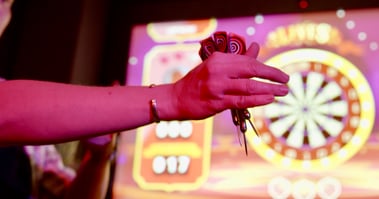
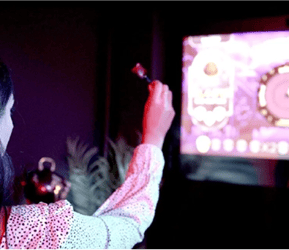
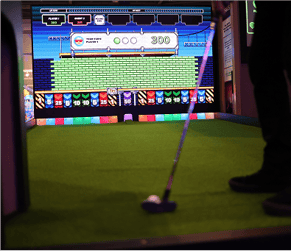
If guests need a long explanation before they can start having fun, you’ve already lost momentum. The best hospitality games feel intuitive within seconds. Whether it’s interactive darts, mini golf, or digitally enhanced experiences, guests should be able to walk up, understand the objective immediately, and join in without feeling intimidated. Hospitality thrives on low friction, and the same rule applies to entertainment.
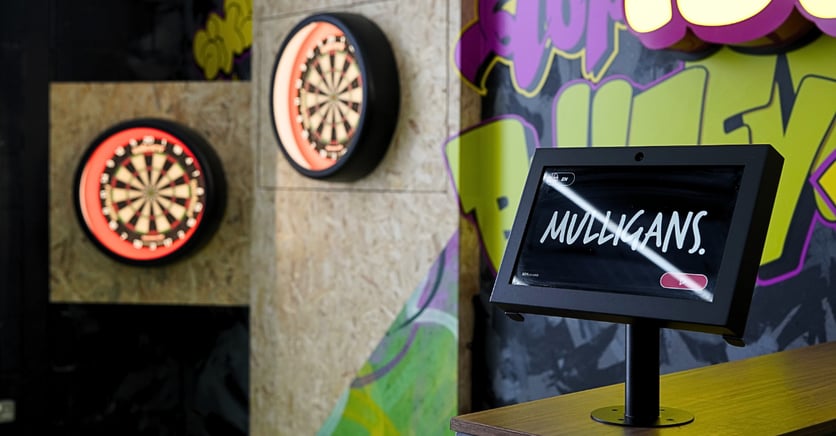
But accessibility today also means something much broader than ease of play. It means designing experiences that more people can physically participate in. Some operators are already recognising this shift. Mulligans in Norwich, for example, introduced an accessible darts lane designed for children and wheelchair users, helping ensure the experience feels genuinely inclusive rather than selectively social.
As hospitality becomes increasingly experience-led, the venues that win will be the ones creating environments where more people feel able to take part, regardless of skill level, confidence, or physical ability.
Speed.
In a hospitality environment, energy is everything... and energy is incredibly fragile. The moment guests are left waiting too long between turns, trying to understand complicated rules, or losing track of scoring, the atmosphere can quickly dip. Short rounds, immediate feedback, intuitive scoring, and constant participation help maintain momentum across the entire group, ensuring people stay engaged even when they’re not actively taking their turn.
There’s also a commercial benefit to this kind of pacing. Experiences that maintain energy naturally encourage guests to stay engaged for longer, order another round, extend their booking, or continue the evening elsewhere within the venue. The goal isn’t to rush people through the experience, it’s to avoid the dead space where energy drops and attention disappears. The best hospitality games understand that maintaining momentum is often what transforms a fun activity into a genuinely memorable night out.
Replayability.
Hospitality operators don’t just need guests to enjoy themselves once. They need compelling reasons for them to return. That’s becoming increasingly important in a market where consumers have more choice than ever, and where novelty alone rarely guarantees long-term loyalty.
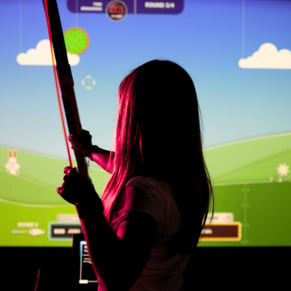
The experiences that drive repeat visits tend to be the ones that evolve over time, offering variation, progression, different game modes, changing challenges, or simply a slightly different social dynamic with every visit. This is where interactive formats are increasingly outperforming more static attractions. A traditional activity may deliver a strong first impression, but experiences that feel dynamic and replayable are far more likely to become embedded in people’s routines.
When guests know they can come back and have a different experience with different friends, different scores, different outcomes, or new ways to play, the activity stops feeling like a one-off occasion and starts becoming part of their regular social habits. In many ways, replayability is what transforms entertainment from a novelty into a long-term revenue driver.
Spectatability.
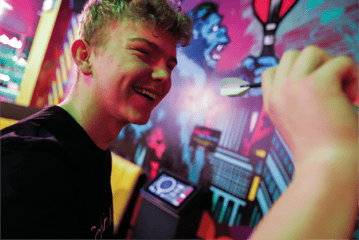
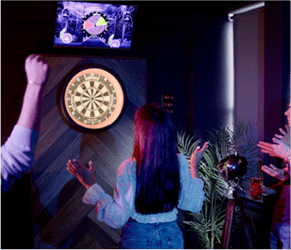
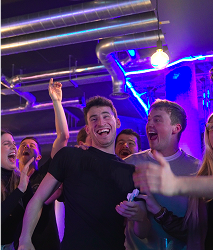
Spectatability is arguably the most underrated factor of all. The best hospitality games create entertainment beyond the players themselves. They generate reactions, celebration, rivalry, conversation, and moments that other guests can enjoy watching. Great venues understand that atmosphere is contagious. When a game creates visible energy across the room, it doesn’t just entertain participants, it becomes part of the venue’s overall social currency.
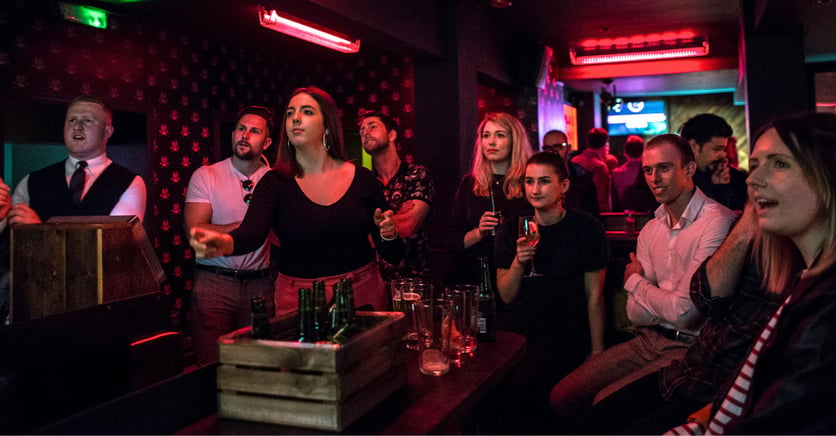
Ultimately, successful hospitality gaming isn’t really about technology or novelty. It’s about designing experiences that fit naturally into how people socialise. The venues getting this right aren’t just adding games. They’re creating environments people want to stay in longer, return to more often, and talk about afterwards.
Ready to supercharge your venue in 2026?

Share